
Browse All Topics
Explore our complete collection of learning topics
C Programming
C is a general-purpose, procedural programming language developed in the early 1970s by Dennis Ritchie at Bell Labs. It is a foundational and highly influential language known for its efficiency, low-level memory access, and portability across various computer platforms
Java Programming
Java programming is a high-level, object-oriented language known for its "Write Once, Run Anywhere" (WORA) capability, allowing code to run on any device with a Java Virtual Machine (JVM), making it highly versatile for building web, mobile (Android), enterprise apps, and big data solutions, emphasizing security, reliability, and portability. It uses a C-like syntax but simplifies complex features, compiling to bytecode that the JVM interprets for different platforms.
Python Programming
Python is a high-level, general-purpose programming language known for its clear, readable syntax and versatility across many domains, from web development to artificial intelligence. It is dynamically typed and interpreted, making it a popular choice for beginners and rapid prototyping
No topics available yet
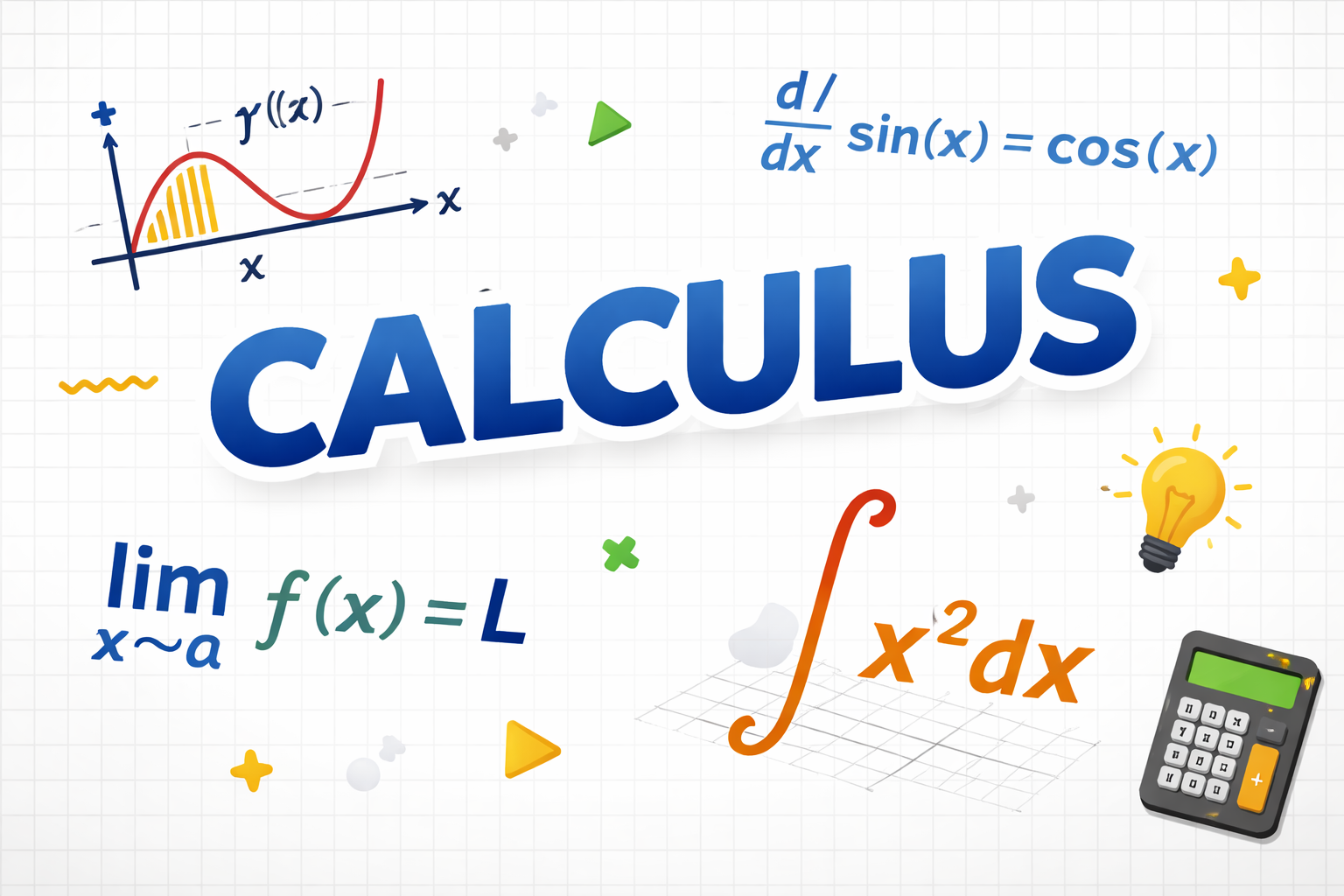
Calculus
Calculus is the mathematical study of continuous change, focusing on how things change over time or space, using two main branches: differential calculus (finding instantaneous rates of change, slopes, and derivatives) and integral calculus (finding accumulation, areas, volumes, and sums of infinite small parts). It provides the tools to model motion, growth, and accumulation, serving as the foundation for physics, engineering, economics, and many other sciences by dealing with curves and dynamic systems, unlike static algebra.
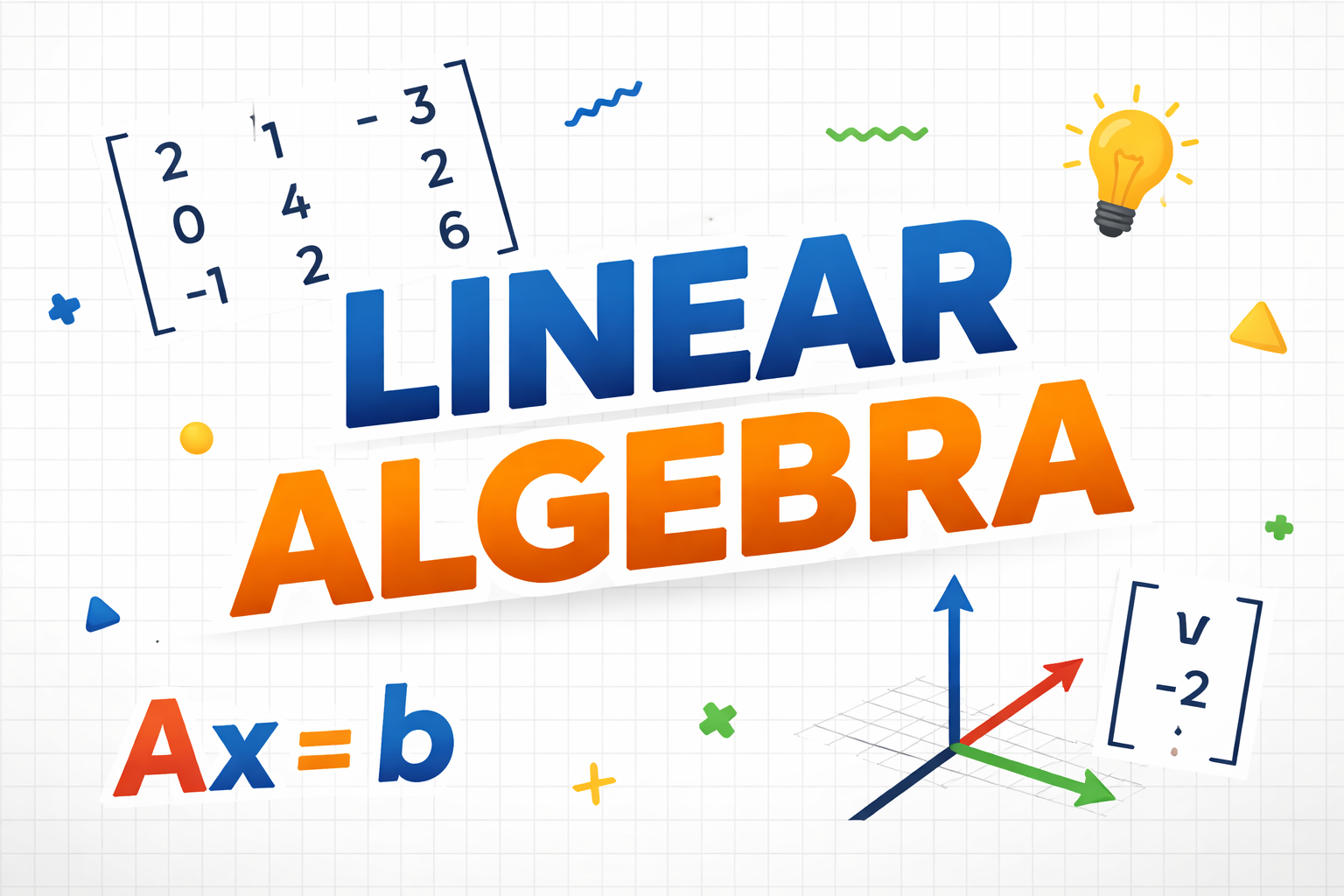
Linear Algebra
Linear algebra is a branch of mathematics that studies vectors, vector spaces, matrices, and linear transformations, providing tools to solve systems of linear equations and model complex data, making it fundamental for fields like physics, engineering, computer graphics, and machine learning.
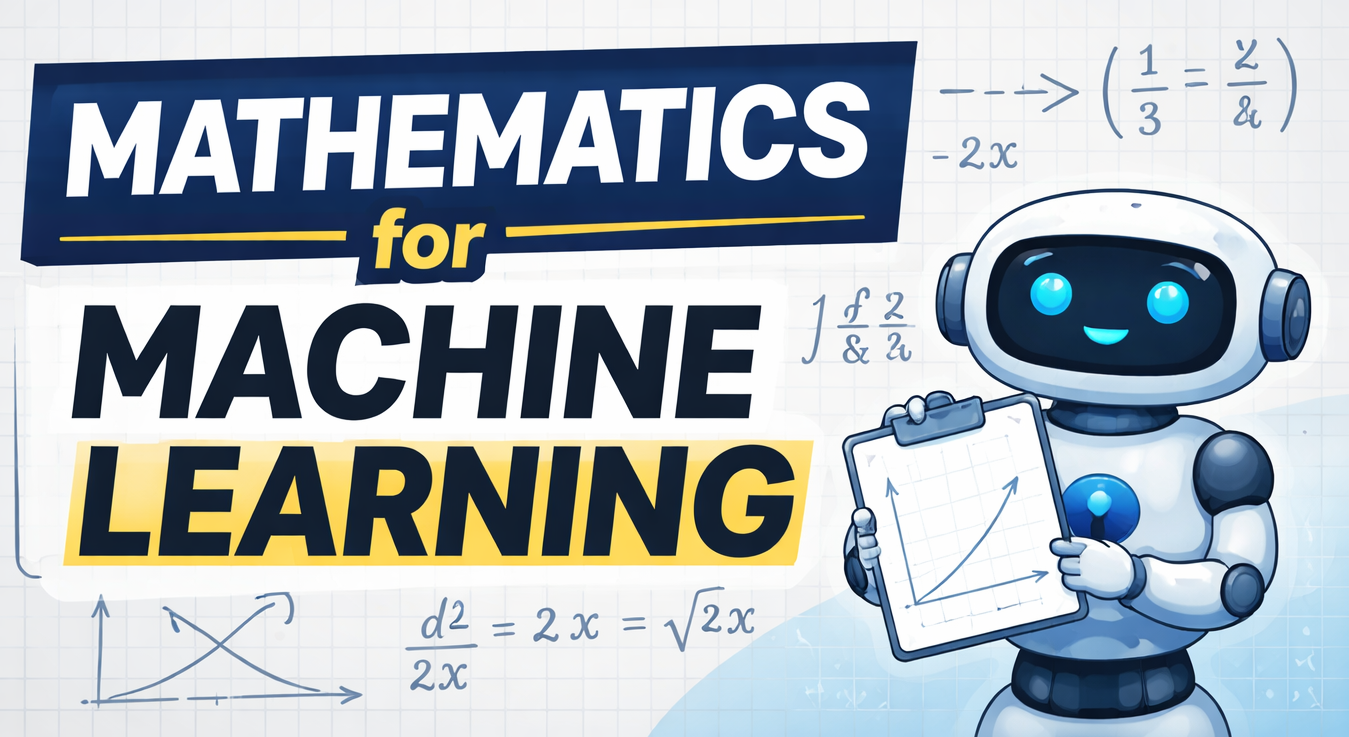
Mathematics for Machine Learning
Mathematics for Machine Learning (ML) describes the foundational concepts from linear algebra, calculus, probability & statistics, and optimization that enable algorithms to represent data, learn patterns, and make predictions, allowing us to build and understand models for tasks like regression, classification, and dimensionality reduction
No topics available yet
No topics available yet
No topics available yet
No topics available yet
No topics available yet

No topics available yet
No topics available yet
No topics available yet
No topics available yet
No topics available yet
No topics available yet
No topics available yet
No topics available yet
No topics available yet
No topics available yet
No topics available yet